 how-to
How Fresh Should Coffee Beans Be
Table of Contents
- Why Coffee Bean Freshness Changes Everything
- The Best Time to Use Coffee Beans After Roasting
- Can Coffee Beans Be Too Fresh After Roasting
- How to Tell If Coffee Beans Are Stale
- How to Store Coffee Beans for Maximum Freshness
- Freshness Across Different Roast Levels
- Getting the Most from Your Fresh Beans
- Frequently Asked Questions
Last Updated: October 21, 2026
Why Coffee Bean Freshness Changes Everything
How fresh should coffee beans be? It's the question that separates a mediocre cup from something genuinely exceptional. The moment coffee is roasted, it begins a slow countdown. Flavour compounds develop, then peak, then fade. Get the timing right and you'll taste the roaster's craft. Miss it and you're drinking stale beans that taste flat, bitter, or muted.
Freshness isn't just about taste. It affects extraction, crema quality, and how your brewing method performs. A fresh bean responds differently to water temperature and contact time than an old one. That expensive grinder and espresso machine you've invested in? They'll perform best with beans at their peak.
At Endymion Coffee, we focus on individually roasted orders specifically because freshness matters this much. When you order from us, your beans are roasted to order, not sitting in a warehouse for weeks. The difference shows up in your cup immediately.
The Best Time to Use Coffee Beans After Roasting
The ideal window to brew coffee is 5 to 14 days after roasting. This is when the beans have finished degassing and flavour compounds are at their most vibrant.
Here's what happens in those first two weeks:
- Days 1-3: Beans are still releasing CO₂ from the roasting process. They're too fresh for most brewing methods. Espresso will choke. Pour-overs will gush. Filter coffee will taste thin.
- Days 5-14: The sweet spot. Flavours have settled. Extraction is predictable. Whether you're using a French press, pour-over, or espresso machine, the beans will behave as intended.
- Days 15-30: Still drinkable, but flavour begins declining. You'll notice it most in espresso and milk-based drinks.
- Beyond 30 days: The coffee is stale. You can still brew it, but you're fighting against flat, dull flavours.
Different roast levels shift this window slightly. A light roast peaks around day 7-10. A dark roast can hold its best flavours until day 14-21. But the general rule holds: wait a few days, then use them within two weeks.
Can Coffee Beans Be Too Fresh After Roasting
Yes. Beans roasted yesterday are actually harder to brew well than beans roasted a week ago.
When coffee is freshly roasted, it's still degassing. CO₂ is escaping from inside the bean. This gas interferes with water contact and extraction. If you try to brew immediately, two things happen: the water can't penetrate the bean properly, and excess gas causes the coffee to bubble and spit, especially in espresso.
The result is sour, thin coffee. It tastes incomplete because it is. You haven't extracted the flavours properly.
That's why speciality roasters always recommend waiting. It's not marketing. It's physics. The beans need time to stabilise before they're ready to brew at their best.
If you find yourself with beans that are only 1-2 days old, don't panic. Store them properly (we'll cover that below) and wait until day 5 to brew. You'll get a noticeably better cup.
How to Tell If Coffee Beans Are Stale
Stale beans show themselves in three ways: appearance, aroma, and taste.
Visual signs:
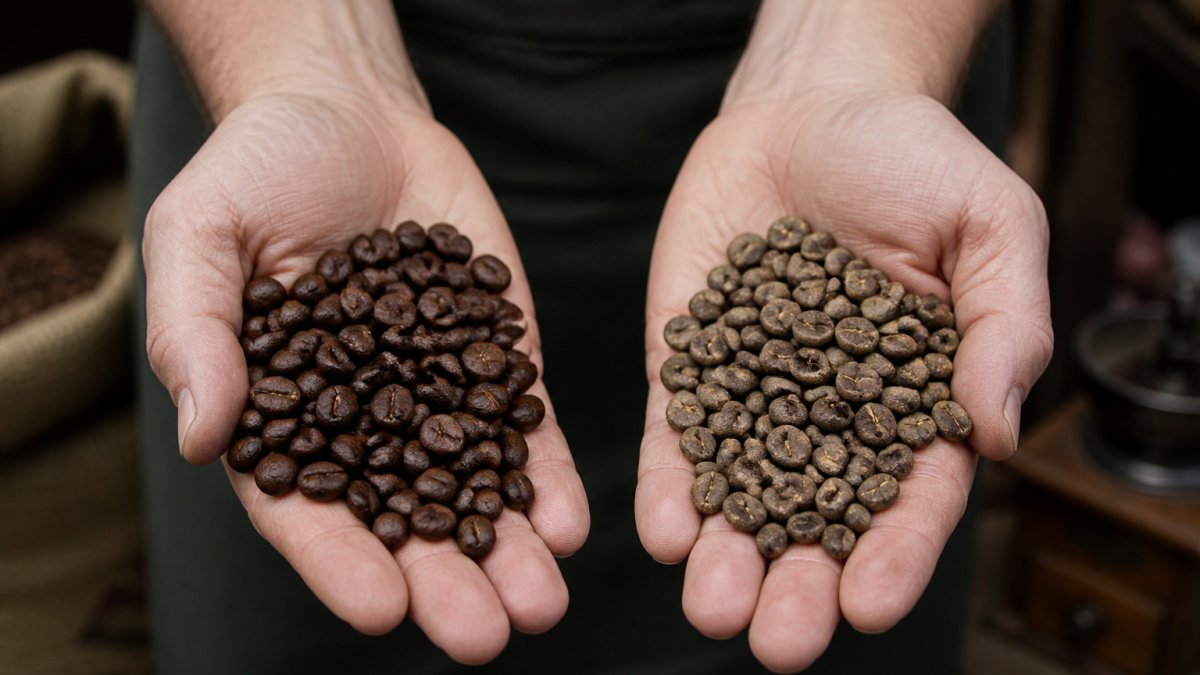
- Fresh beans have a slight sheen and deep colour. They look alive.
- Stale beans look dull and faded. The colour flattens. Sometimes they develop a greyish cast.
- If the beans look dusty or have visible oil residue when they shouldn't, they're past their prime.
Smell test:
- Fresh beans smell rich, complex, and inviting. You can detect chocolate, fruit, spice, or floral notes depending on the origin.
- Stale beans smell flat. The aroma is muted. Sometimes they smell musty or cardboard-like.
The taste:
- Stale coffee tastes thin and bitter. You'll notice it immediately after the first sip.
- There's no sweetness. No complexity. Just a harsh, one-dimensional flavour.
If your beans are more than 30 days old and you're not sure, brew a small cup. Your palate will tell you everything.
How to Store Coffee Beans for Maximum Freshness
Storage is where most home brewers go wrong. They buy premium beans and then keep them in the wrong place.
The enemy is air, light, heat, and moisture. Oxygen breaks down flavour compounds. Light accelerates the process. Heat speeds everything up. Moisture can cause mould.
Here's how to store beans properly:
- Use an airtight container. A sealed jar or bag with a one-way valve works best. The valve lets CO₂ escape without letting air in.
- Keep it dark. Store in a cupboard or drawer, not on the bench. Avoid clear containers.
- Store at room temperature. Not in the fridge or freezer. Temperature fluctuations create condensation, which damages the beans.
- Keep away from the stove. Heat from cooking accelerates staling.
- Buy only what you'll use in 2-3 weeks. Smaller, frequent orders beat bulk buying.
Many people freeze coffee to extend its life. It works, but it's not ideal. Freezing slows the staling process, but thawing creates moisture. If you must freeze, use an airtight container and thaw only what you need.
The best approach? Order fresh beans regularly. With Endymion Coffee's individually roasted model, you can have beans at peak freshness without worrying about long-term storage.
Freshness Across Different Roast Levels
Roast level changes how quickly beans peak and how long they hold their best flavours.
Light roasts:
- Peak freshness: Days 7-10
- Hold quality until: Day 14-18
- Light roasts have more delicate flavours. They fade faster than darker roasts. Use them sooner.
Medium roasts:
- Peak freshness: Days 8-12
- Hold quality until: Day 18-25
- This is the sweet spot for most brewing methods. Medium roasts are forgiving and hold their flavours longer.
Dark roasts:
- Peak freshness: Days 10-14
- Hold quality until: Day 21-30
- Dark roasts are stronger. The deeper roast locks in flavours. They're more forgiving if you wait a few extra days.
The roast level also affects how the beans behave during brewing. Light roasts need slightly higher water temperatures and shorter contact times. Dark roasts are more forgiving with temperature and timing.
If you're new to speciality coffee, start with a medium roast. They're easier to brew well and hold their quality longer than light roasts.
Getting the Most from Your Fresh Beans
Freshness is only half the equation. How you brew matters equally.
Grind fresh. Grind your beans immediately before brewing. Ground coffee stales within 15-20 minutes. Whole beans last weeks.
Use the right ratio. Most brewing methods work best with a 1:16 ratio (1 part coffee to 16 parts water). Adjust from there based on taste.
Water temperature matters. Aim for 90-96°C. Too hot and you'll over-extract. Too cool and you'll under-extract. Fresh beans are more forgiving of small temperature variations than stale beans.
Clean your equipment. Old coffee residue on your grinder or brewer will taste stale. Clean regularly.
Keep notes. Write down what you did and how it tasted. After a few brews, you'll learn what works with your equipment and taste preferences.
Fresh beans deserve proper technique. The good news: you don't need to be an expert. Basic consistency is enough. Use fresh beans, grind fresh, stick to a ratio you like, and you'll notice the difference immediately.
Frequently Asked Questions
How soon after roasting should you use fresh coffee beans?
Most speciality roasters recommend waiting 3-7 days after roasting before brewing. This allows carbon dioxide to escape and flavours to settle. However, fresh coffee beans remain excellent for up to 4 weeks if stored properly in an airtight container away from heat and light. The exact window depends on your roast level and brewing method.
Can coffee beans be too fresh after roasting?
Yes. Beans roasted only 1-2 days ago release excessive carbon dioxide, which can cause uneven extraction and a sour taste in espresso or filter coffee. Waiting until day 3-5 allows degassing to progress naturally. For lighter roasts, this settling period is particularly important for achieving balanced flavour.
How can you tell if coffee beans are stale?
Stale beans appear dull and lack the glossy sheen of fresh ones. They smell flat or musty rather than aromatic. When brewed, stale coffee tastes muted, papery, or bitter without the bright, complex flavours you'd expect. If your beans are more than 8-10 weeks old, they've likely lost significant flavour, especially if stored poorly.
What's the best way to store coffee beans to keep them fresh?
Store beans in an airtight container away from direct sunlight, heat, and moisture. A cool, dark cupboard is ideal; avoid the fridge or freezer, as condensation damages them. Buy only what you'll use within 4 weeks. Whole beans stay fresher longer than ground coffee, which loses aroma within days of grinding.
Getting the most from premium beans starts with understanding freshness. Order regularly, store properly, and brew within that 5-14 day window. At Endymion Coffee, we roast to order so your beans arrive at their peak. Our individually roasted approach means you're not buying stock that's been sitting around. Every order is fresh, backed by our satisfaction guarantee, and roasted specifically for your brew.